Repair & servicing

Workshop services built around the mechanism in front of us.

From a stopped wristwatch to an unstable longcase clock, the useful question is not which package fits best, but what the movement actually needs to work correctly and safely.

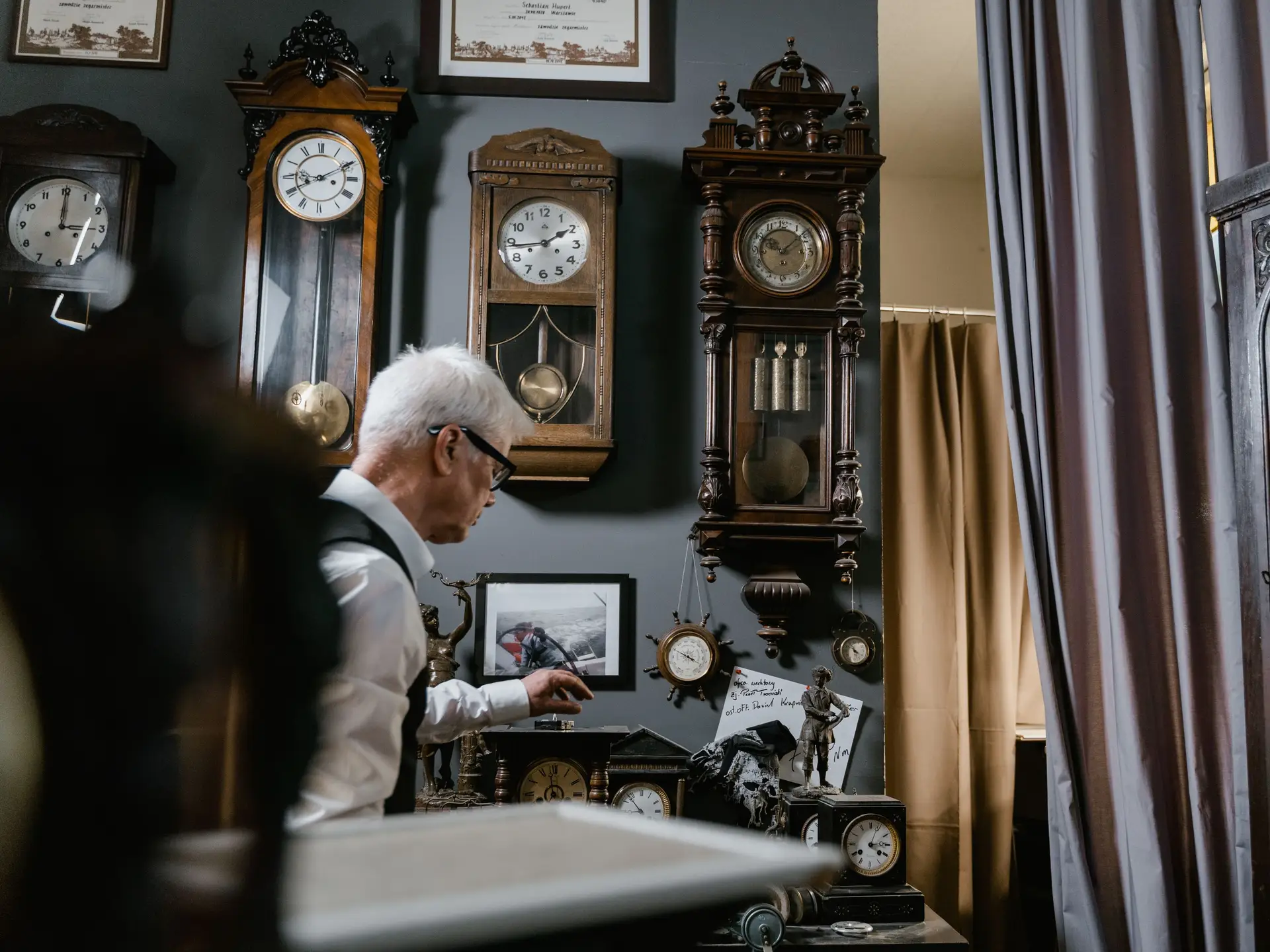
Watchmaker adjusting a traditional clock movement at the benchYork · Watch & clock workshop

Core services

Practical work for everyday and collectible timepieces.

We separate maintenance, fault repair and restoration because each has a different objective. A routine service aims to restore correct operating conditions; a repair addresses a defined fault; restoration may also involve stabilising age-related damage while protecting original material.

W

Mechanical watch servicing

For hand-wound and automatic watches where wear, contamination or degraded lubrication is affecting performance.

  • Movement inspection and disassembly
  • Controlled cleaning and lubrication
  • Regulation and functional checks
  • Case and crown fit reviewed as part of reassembly
Q

Quartz watch repair

Battery replacement is only one possibility. A stopped quartz watch may also have contact, coil, gear-train or movement faults.

  • Battery and contact assessment
  • Hands and calendar function checks
  • Movement replacement only when appropriate
  • Case sealing condition reviewed where relevant
P

Pocket watches

Older pocket watches often combine mechanical wear with fragile dials, cases and previous repairs. We evaluate the whole object, not only the escapement.

  • Winding and setting faults
  • Balance and escapement work
  • Train and pivot inspection
  • Case, bow, pendant and hand fitting
C

Clock repair

Mantel, wall, carriage and longcase clocks are assessed for power delivery, train freedom, escapement geometry and striking or chiming function.

  • Time train and strike train faults
  • Pendulum and suspension issues
  • Pivot and bushing work where justified
  • Setup guidance after transport
R

Case and external component work

Straps, bracelets, crystals, crowns and hands can affect usability, but external work is kept separate from unnecessary refinishing.

  • Strap and bracelet fitting
  • Crystal and hand replacement
  • Crown and stem assessment
  • Conservative cleaning where suitable
A

Condition assessment

Useful before restoration, inherited-piece decisions or when repair history is uncertain. We identify visible condition and likely priorities.

  • Movement and case observations
  • Previous repair evidence
  • Urgent versus optional work
  • Written scope before substantial intervention
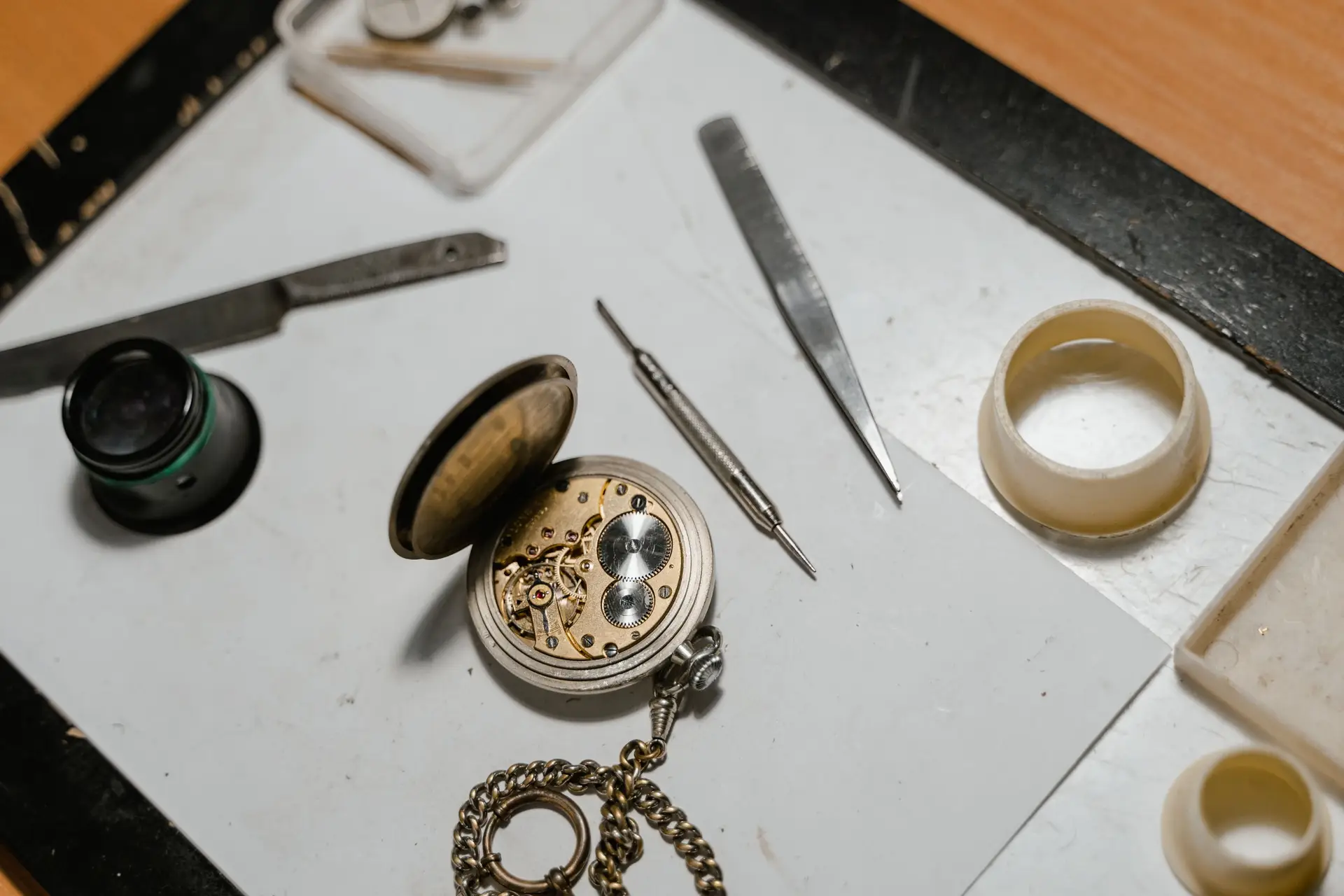
Watch movement parts and precision tools laid out for service

What a service is for

Cleaning alone is not a complete service.

A movement can be clean and still run poorly if pivots are worn, endshake is wrong, the mainspring cannot deliver power correctly or the escapement is not functioning as intended. Proper servicing combines cleanliness with mechanical inspection and adjustment.

For older watches, we also consider whether replacement parts are available, whether a worn original part can be repaired, and whether intervention would reduce historical integrity. These decisions are discussed before the job grows beyond the agreed scope.

Water resistance

Opening a case can affect sealing. Any water-resistance claim depends on case construction, component condition and appropriate testing. We do not assume an older watch is water resistant simply because it once carried such a rating.

Service sequence

What happens after a timepiece arrives.

01 · Intake

Identity, symptoms and condition

We record the stated problem, visible condition and useful background such as recent impacts, intermittent stopping, repair history or transport issues.

02 · Examination

Movement-level inspection

The mechanism is examined far enough to identify the likely cause and to determine whether further dismantling is needed for an accurate scope.

03 · Approval

Defined work before expansion

Necessary repair is separated from optional work. If dismantling reveals a materially different condition, we stop and discuss it rather than silently adding work.

04 · Bench work

Repair, service and adjustment

Approved tasks are completed with attention to component fit, lubrication, train freedom, escapement behaviour and the relevant functions of the timepiece.

05 · Verification

Functional checks before return

We check the operation that can reasonably be assessed at the bench, document notable limitations, and provide handling or setup guidance where it matters.

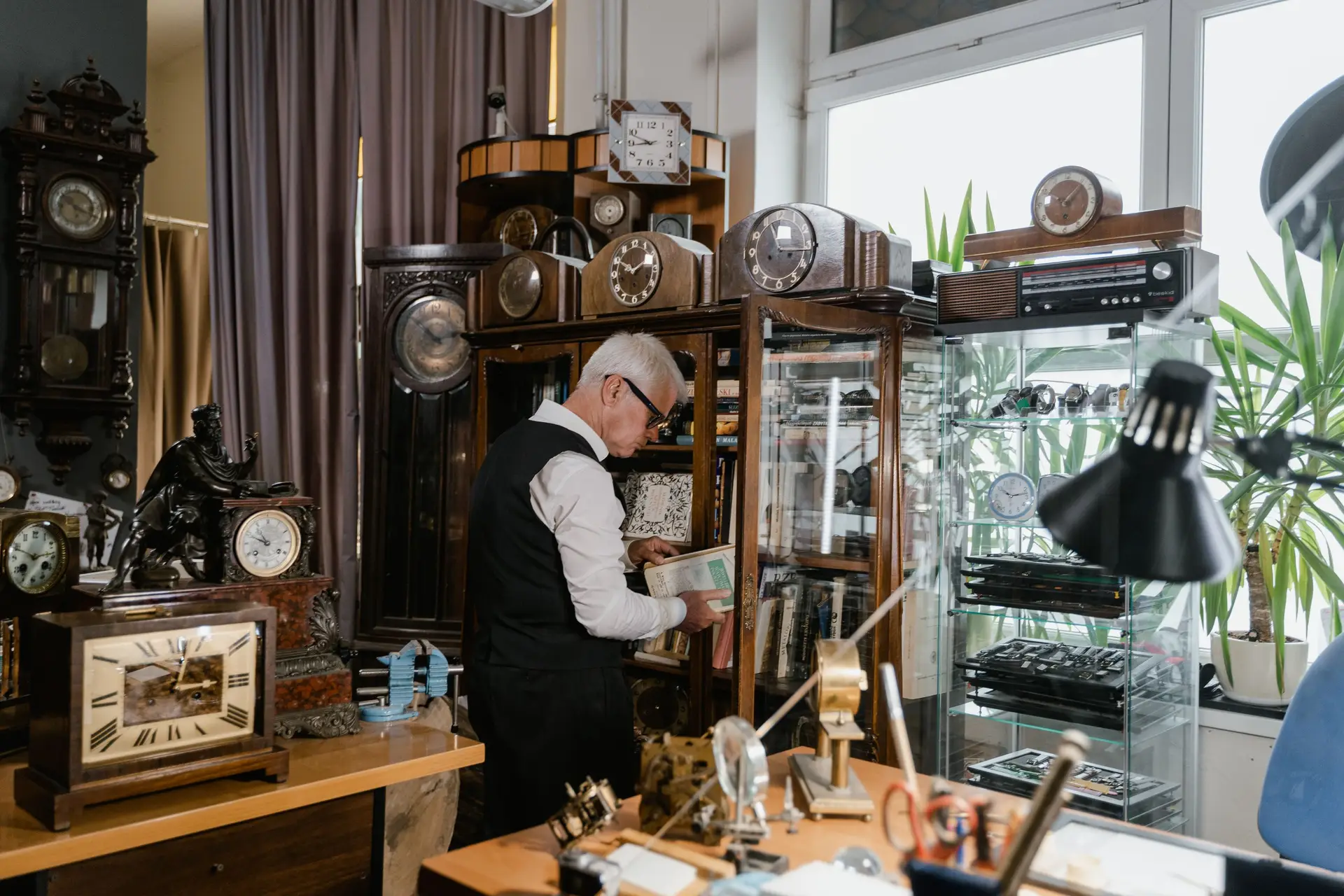
Traditional clock workshop with multiple clocks and a watchmaker

Clocks need context

A clock can leave the bench correctly and still need careful setup at home.

Level, beat, pendulum position, case stability and transport can all affect operation. Longcase clocks in particular depend on correct installation. When relevant, we explain the setup points that help distinguish a mechanism fault from an installation issue.

For striking and chiming clocks, we also check sequence and synchronisation so that the displayed time and the striking train agree.

Not sure whether you need a repair, service or restoration?

You do not need to diagnose it yourself. Describe the symptoms and the type of timepiece; our first task is to establish what kind of work is actually appropriate.