Do not force a stuck control
If winding, setting, a crown or a key suddenly feels wrong, stop rather than applying extra force. The extra damage can be greater than the original fault.
Contact the workshop
A useful first enquiry is simple: tell us whether it is a watch or clock, what it is doing now, roughly when the problem began, and anything you know about earlier work.
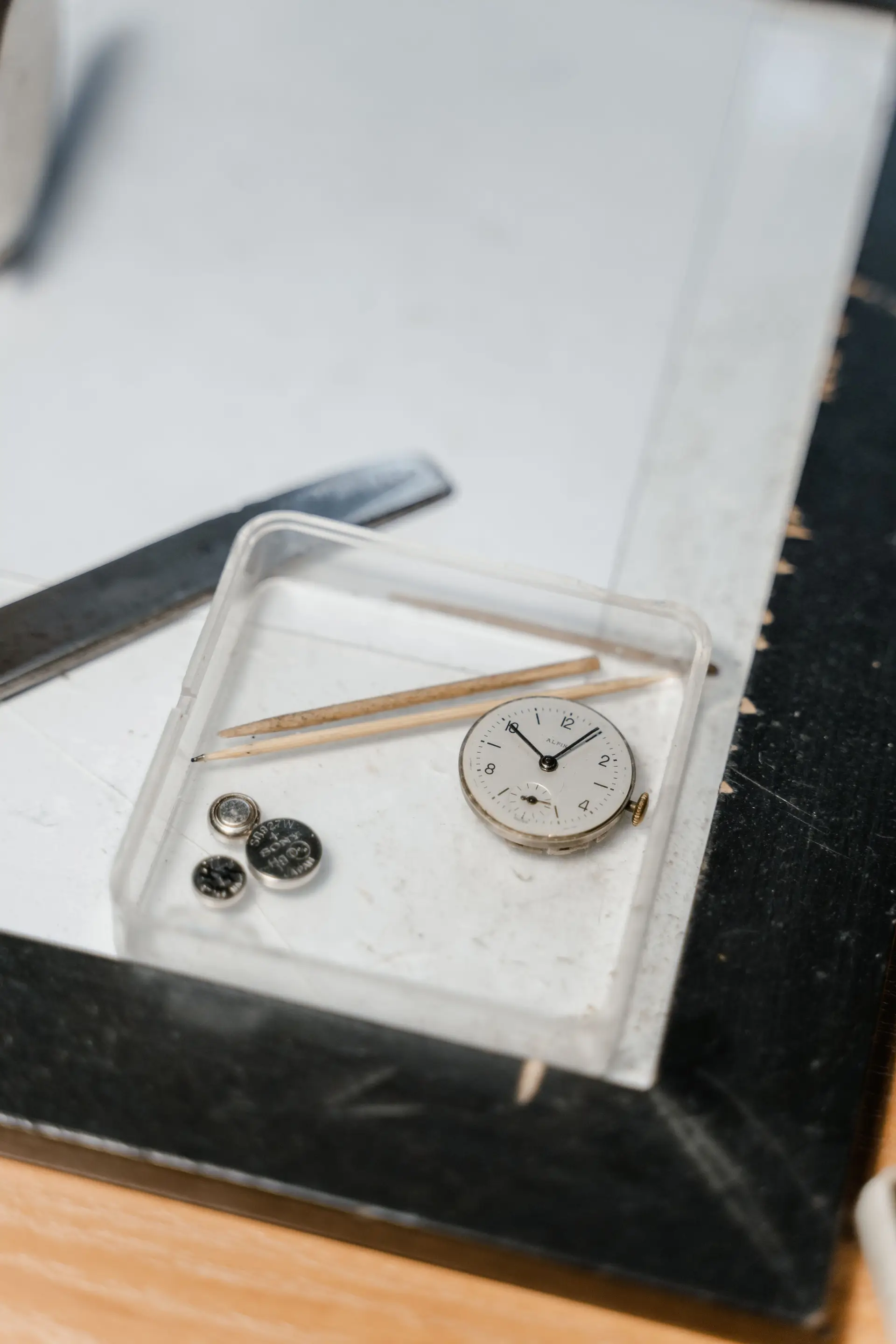 Assessment before substantial work
Enquiry form
The more specific the symptoms, the easier it is to advise on the next useful step. You can include the maker, approximate age and any service history if known.
Before you bring it in
Watches can usually travel in a protective box with the crown and pushers protected from impact. Clocks vary much more. Pendulums, weights, glass and unsecured doors can be damaged if transported without preparation.
If winding, setting, a crown or a key suddenly feels wrong, stop rather than applying extra force. The extra damage can be greater than the original fault.
If a hand, screw, crystal fragment or other component has come away, keep it in a small labelled container and bring it with the timepiece.
For clocks with weights, cables, chains or removable pendulums, photographs of the installed arrangement can make reassembly and fault discussion easier.
Previous invoices, known replacement parts and a note of when the fault began can help distinguish a new issue from an older limitation.
Common questions
Photographs can show model, visible condition and obvious damage, but many faults require movement inspection. We can often explain the likely assessment path before the piece arrives, while a firm repair scope may require bench examination.
Usually not as a first step. Original surfaces and edges can be lost quickly. If appearance work is appropriate, it should be considered separately after condition and historical character are understood.
Sometimes, but useful diagnosis can depend on pendulum, weights, seatboard, hands or case geometry. Contact us first so we can tell you which components are relevant to the reported fault.
Note when it stops, how long it runs after winding, whether position affects it, and whether the issue began after an impact, transport or earlier repair. Patterns are often more useful than a single observation.