Original material
Serviceable original parts are kept wherever practical, even when a new part could look neater.
Restoration & conservation
Older watches and clocks carry evidence of manufacture, use, repair and ownership. Our restoration approach aims to preserve that evidence while addressing instability, damage and mechanical failure.
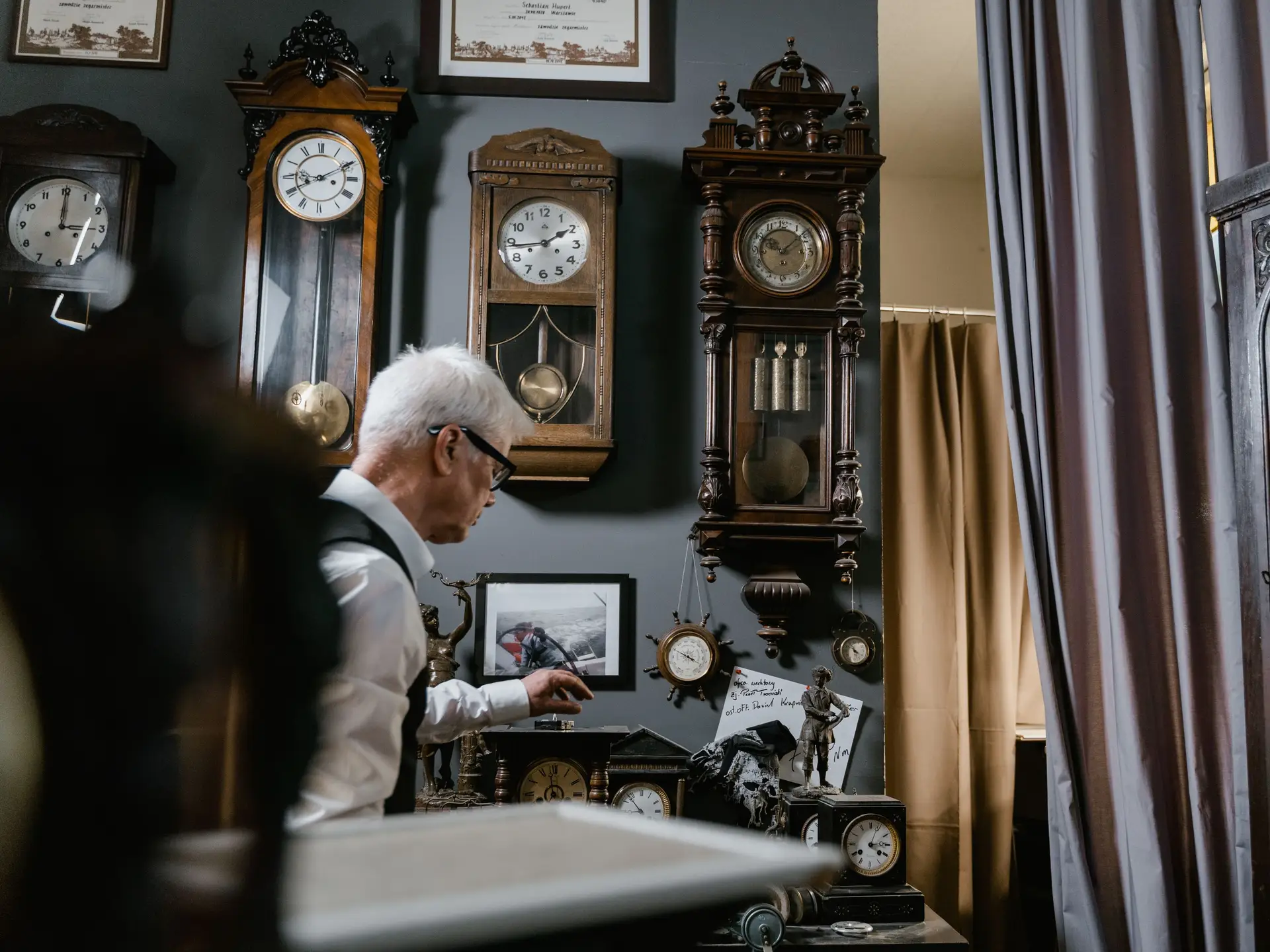 Conservation-minded restoration
Restoration philosophy
Restoration is often most successful when the objective is specific: make the movement safe to operate, recover a missing function, stabilise corrosion, replace an irretrievably damaged service part, or correct a past repair that is causing harm. Cosmetic change is treated as a separate decision.
Serviceable original parts are kept wherever practical, even when a new part could look neater.
Significant findings and non-obvious interventions are documented so later work starts with better information.
Dial, case and surface work is not bundled automatically with mechanical repair.
Where reliability, originality and cost pull in different directions, we set out the options before proceeding.
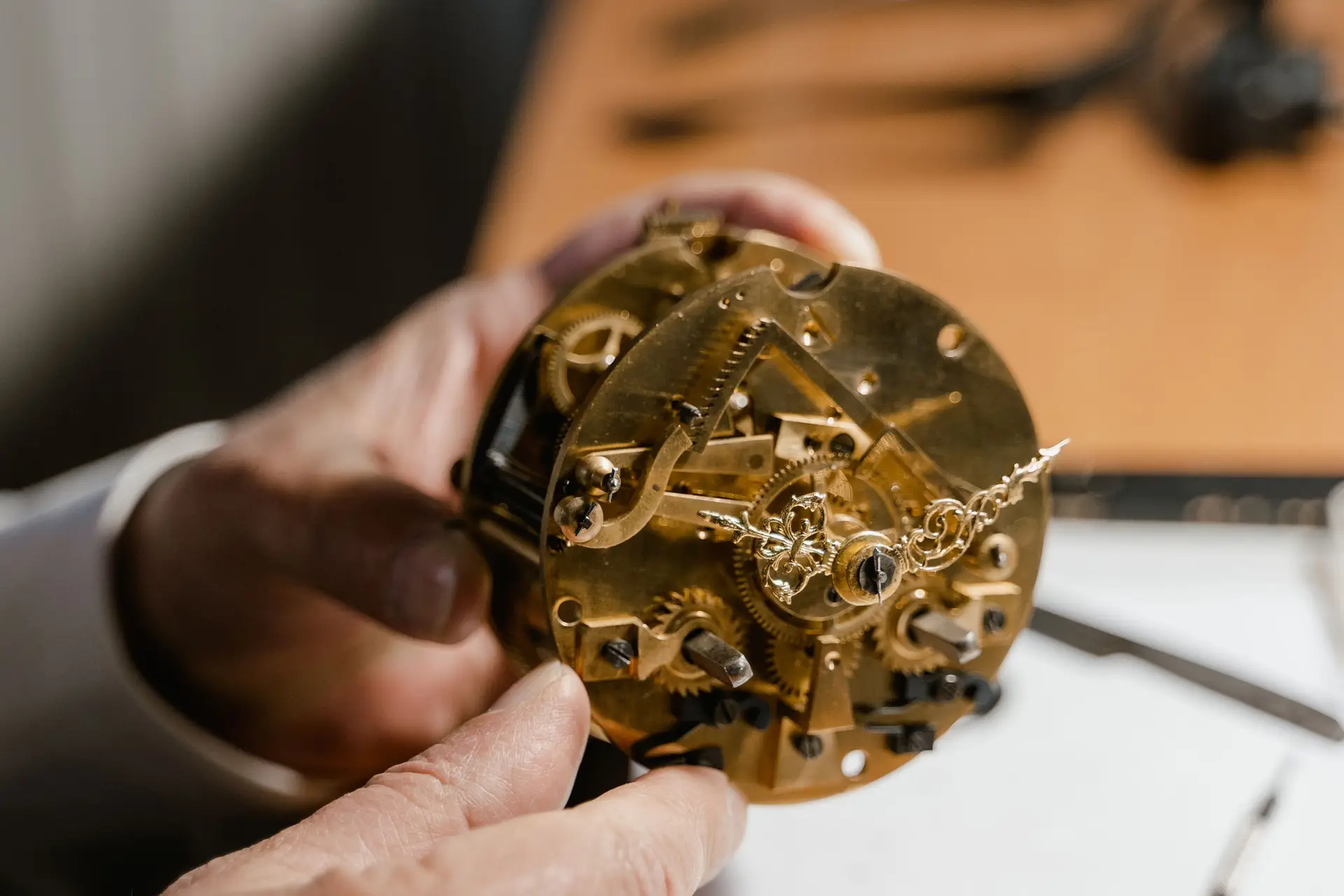
Mechanical restoration
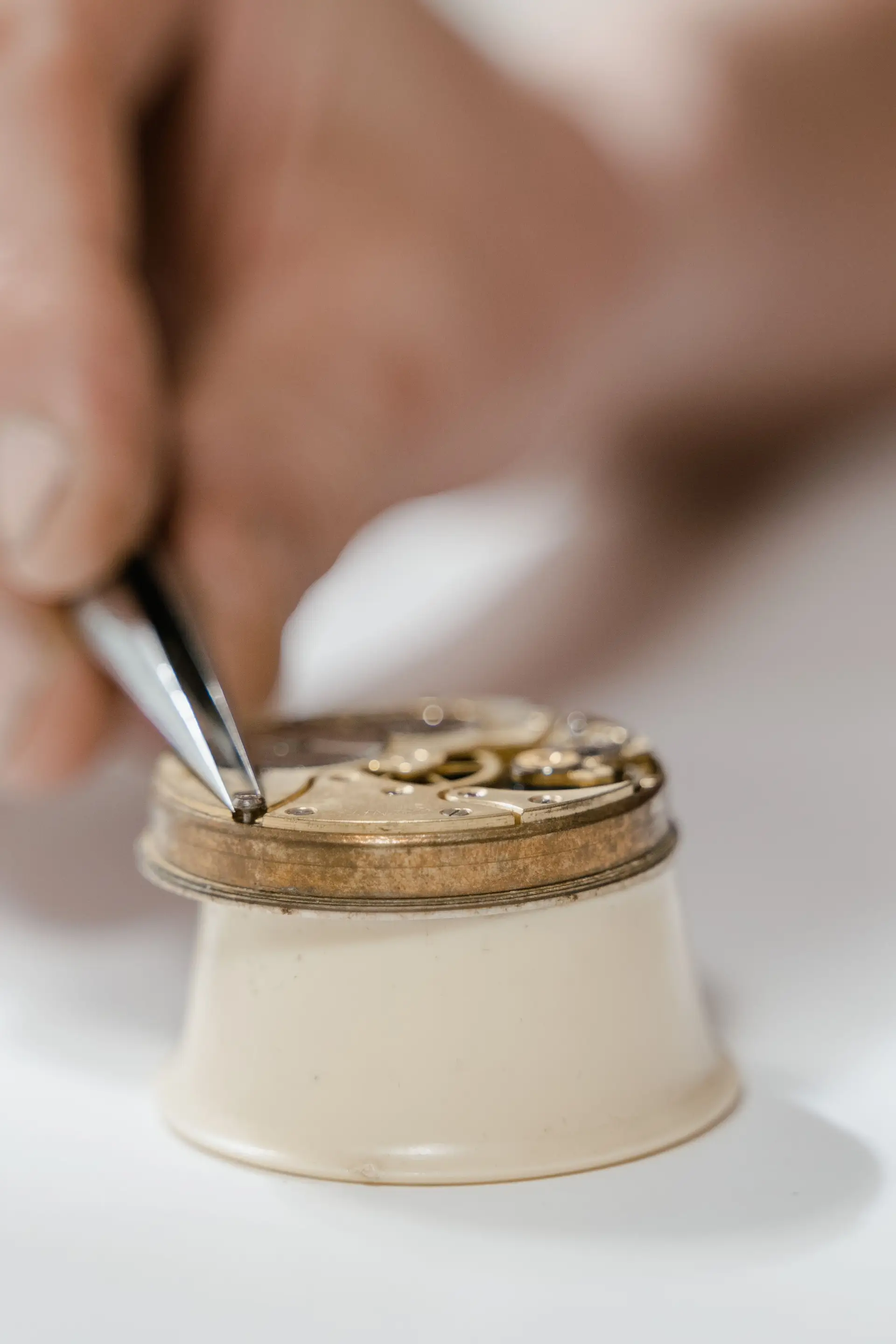
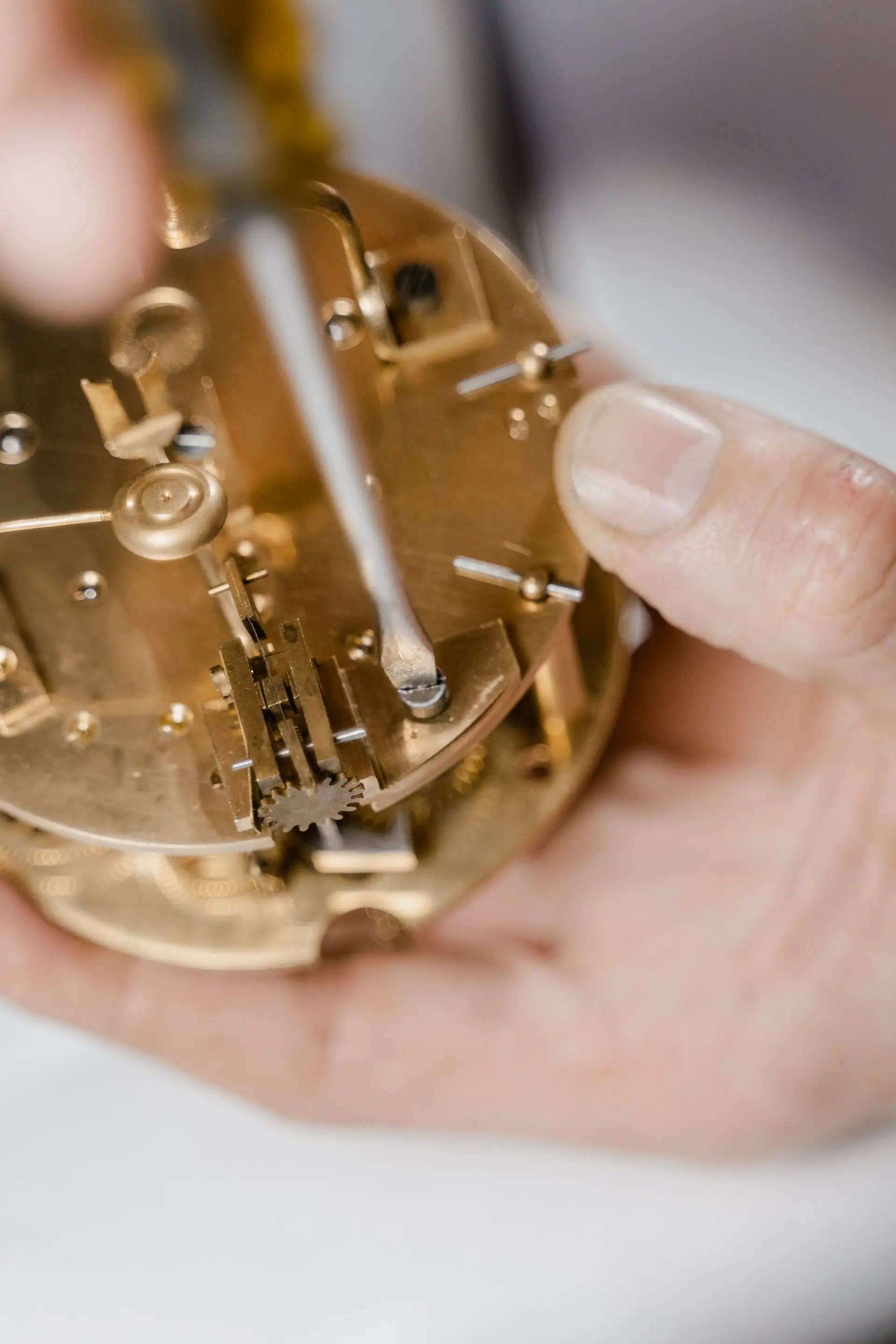
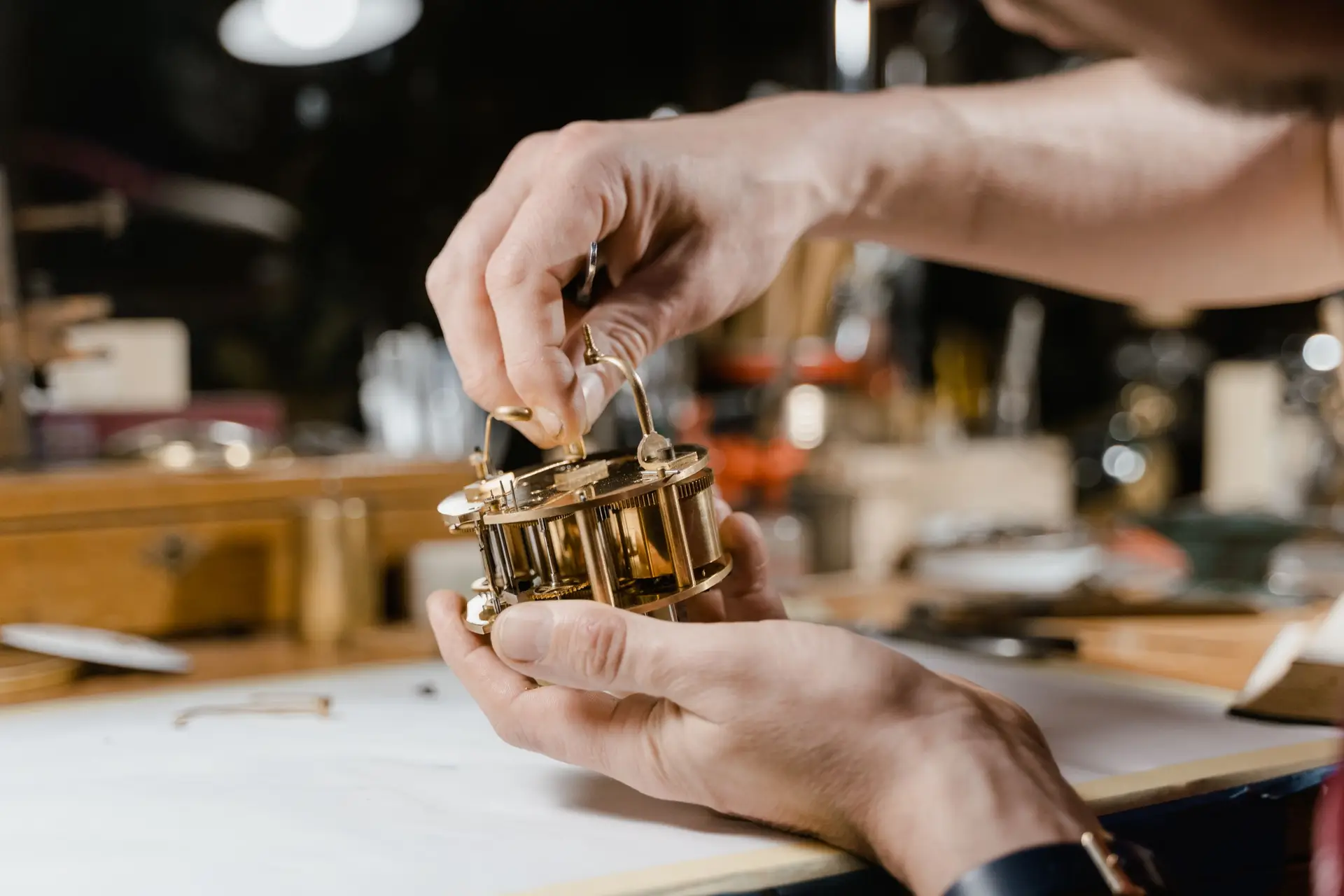
In a clock movement, oval pivot holes, worn pivots, wheel alignment and escapement marks can show where power has been lost or redirected. In a watch, balance condition, jewels, endshake, mainspring behaviour and escapement surfaces can reveal why rate or amplitude has deteriorated.
We do not assume every worn component must be replaced. Depending on the mechanism, repair may involve correcting a bearing surface, making or adapting a service component, addressing geometry, or leaving a stable age-related feature untouched.
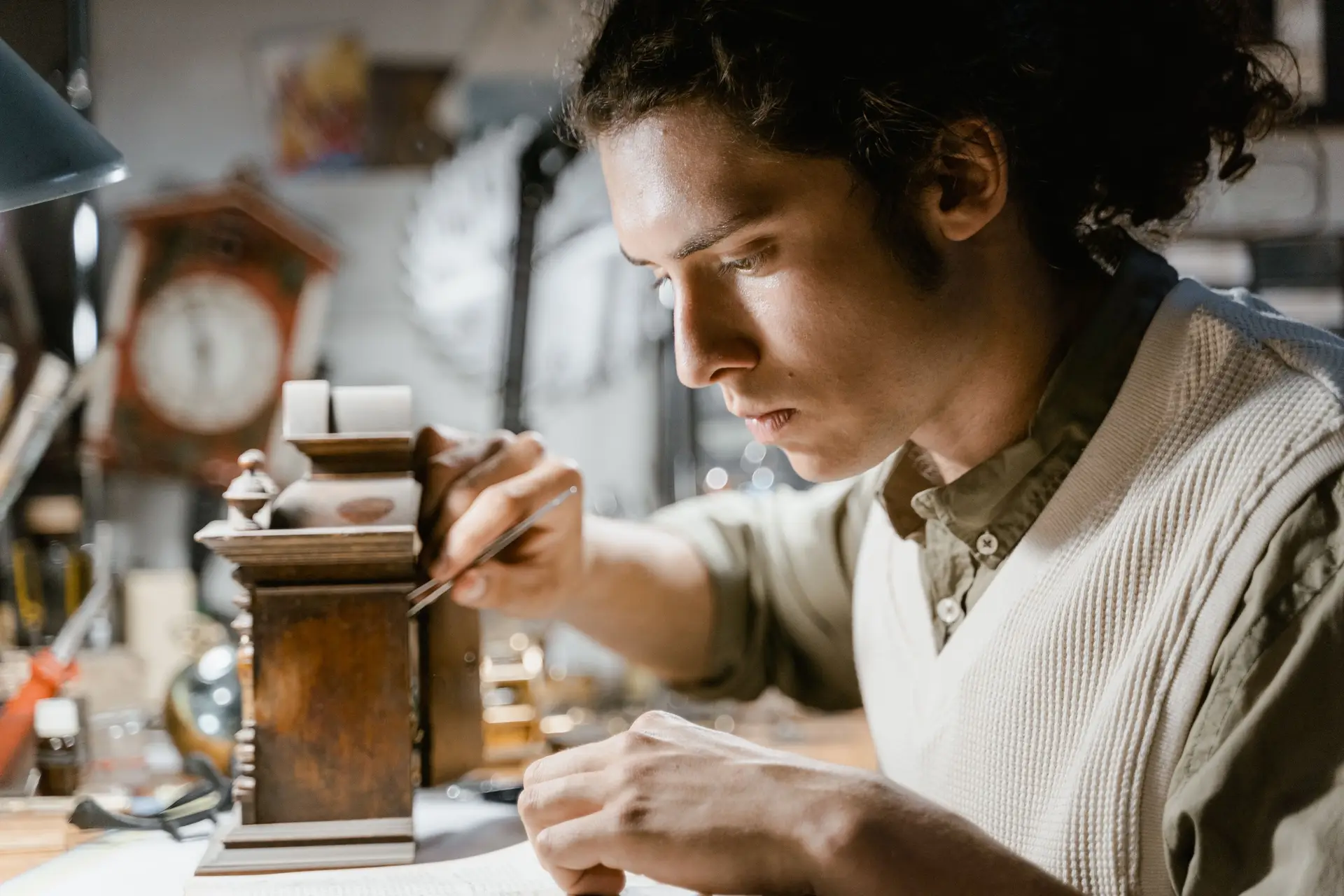
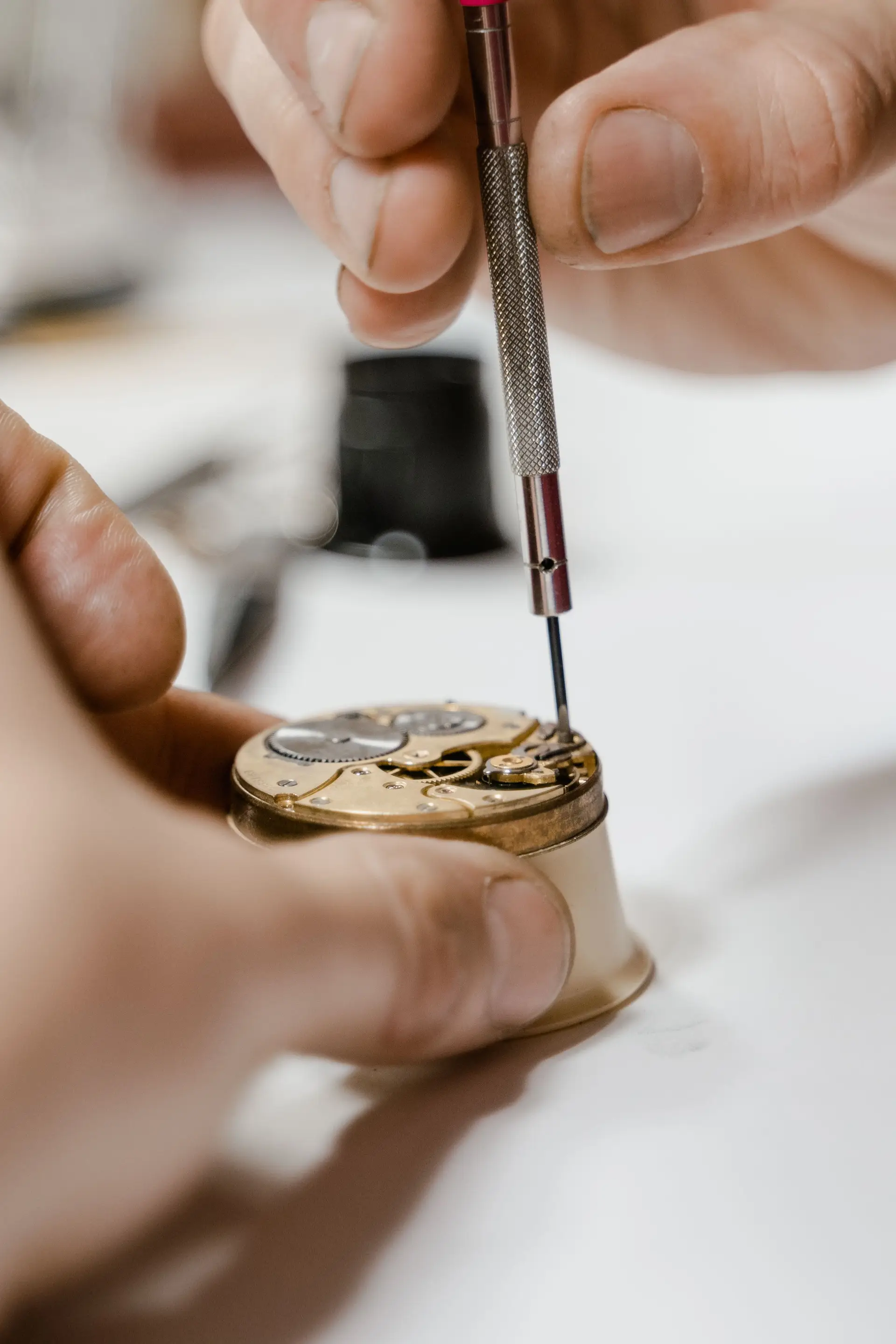
Decision framework
We look for evidence of original finishes, parts, screws, hands, dials and later substitutions.
Active wear, corrosion, loose components and incorrect previous work receive priority over appearance.
A display piece and a regularly worn watch can justify different compromises around durability and originality.
Where choices are otherwise equal, we prefer methods that do not unnecessarily close off future conservation options.
Dials, cases & surfaces
Patina, plating wear, softened engraving and dial marks are part of a timepiece's history. Aggressive refinishing can remove original geometry, marks and surfaces that cannot be recreated later. For that reason, mechanical restoration does not automatically include polishing, dial refinishing or case alteration.
When cosmetic work is requested, we discuss what can be cleaned safely, what change is irreversible, and whether the visible result is likely to be consistent with the age and character of the object.
Replacement parts
A replacement can be necessary when an original service component is missing, fractured or beyond safe repair. Fit, material and function matter more than superficial resemblance. We aim to avoid alteration of neighbouring original parts merely to accommodate an unsuitable replacement.
Send clear photographs and any history you know. We can outline what information is useful before you bring or send the timepiece to the workshop.