Observe first
Faults are interpreted in context. Wear, alignment, lubrication, previous repair and user-reported symptoms are considered together.
About Elvarinothessaria
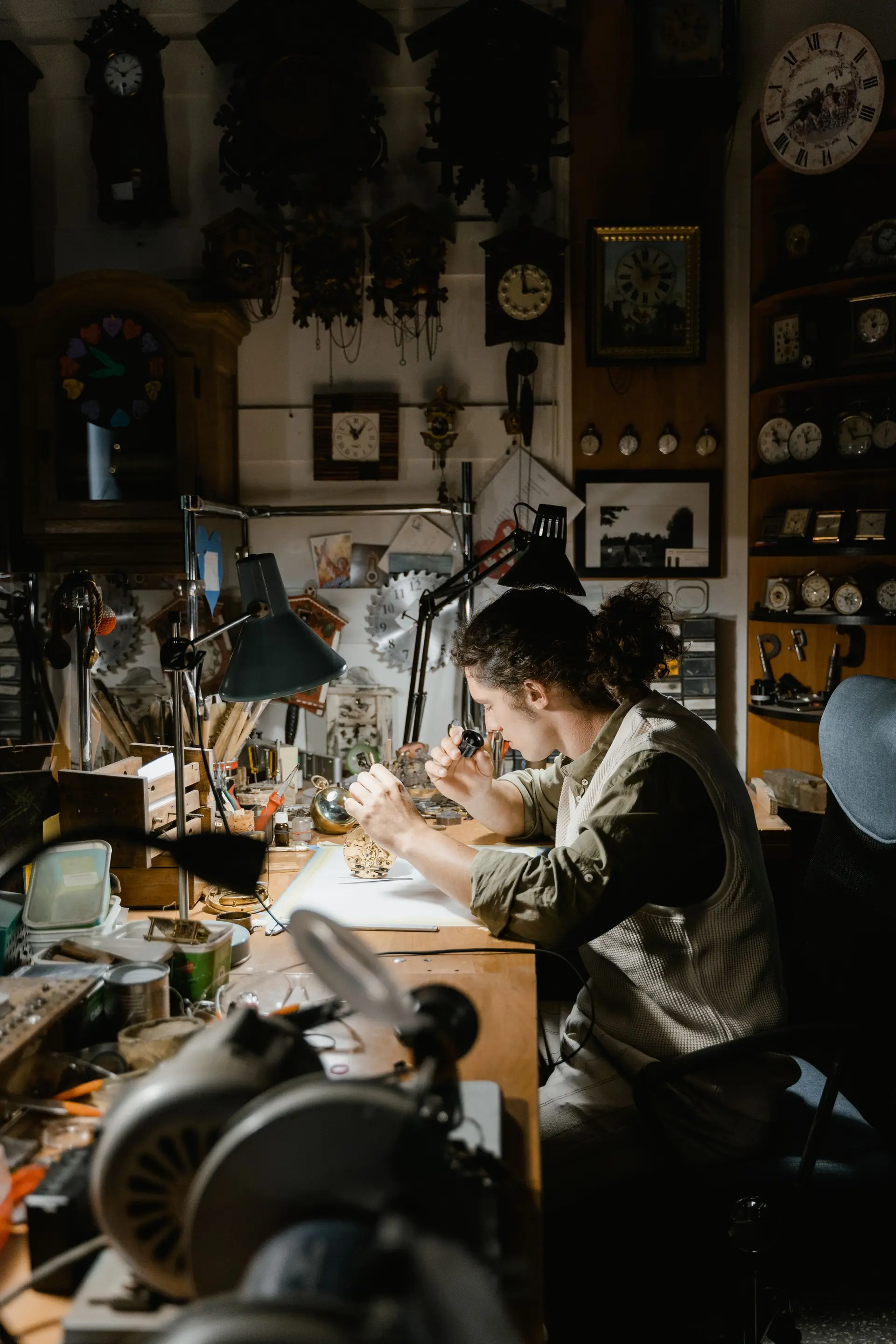
Horology rewards patience, order and evidence. Our workshop is organised around those principles: understand the mechanism, protect what matters, make only the intervention that can be justified, and verify the result before handover.
 Independent workshop · York
Workshop principles
Good bench work depends on repeatable habits: clean handling, organised parts, suitable tools, careful measurement and the willingness to stop when the evidence does not support the next step. These habits matter whether the object is modest, sentimental or collectible.
Faults are interpreted in context. Wear, alignment, lubrication, previous repair and user-reported symptoms are considered together.
We avoid turning a repair into a cosmetic rebuild unless there is a clear reason and the owner has agreed to it.
Clear notes about limitations and significant work help owners and future repairers understand what has changed and why.
The bench environment
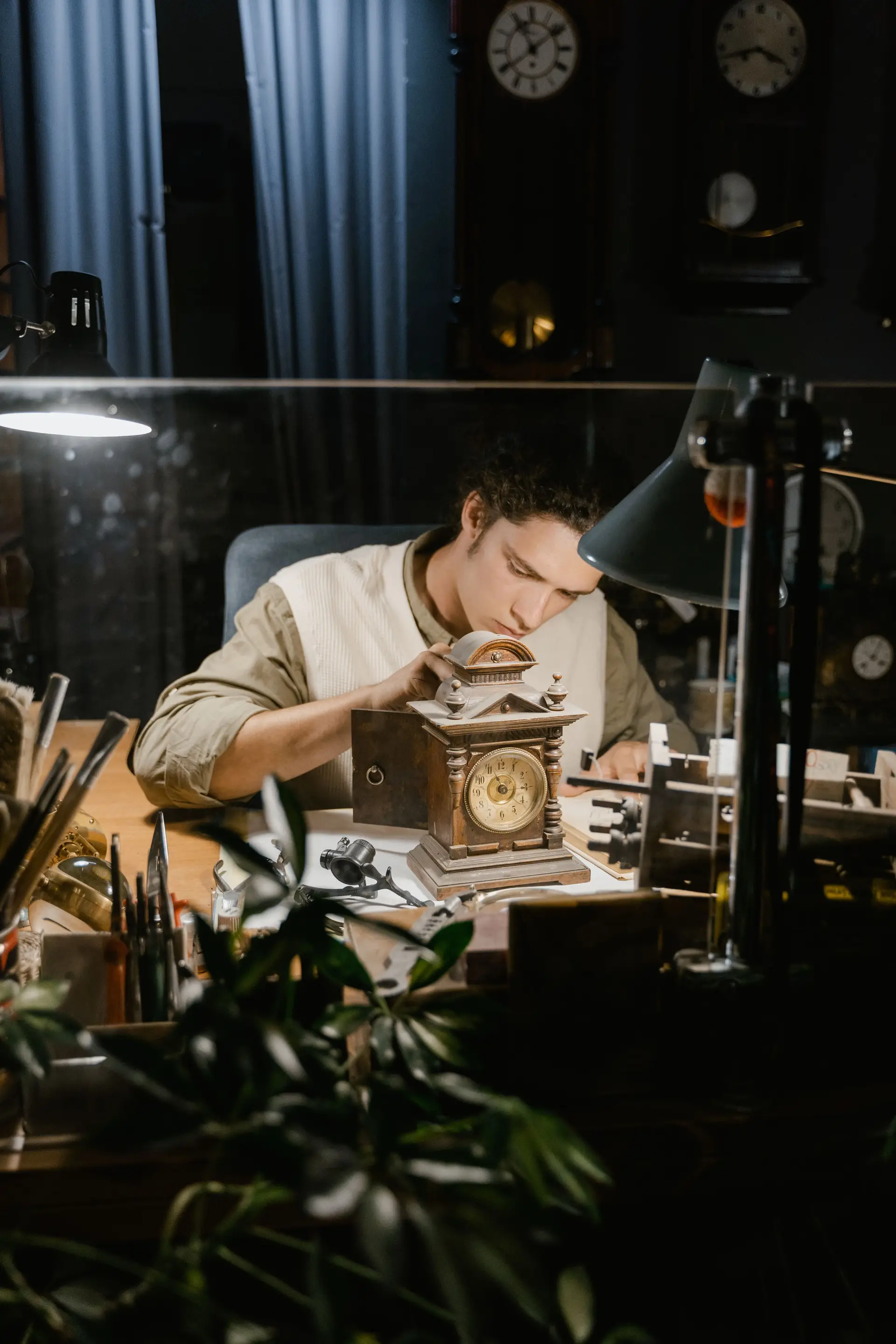
Small mechanical parts are unforgiving of rushed handling. A bench needs good illumination, stable support, controlled storage for disassembled components and a workflow that reduces the chance of contamination or mix-ups.
For clocks, the workspace also needs room to examine larger plates, trains, pendulums and strike systems without forcing delicate parts into a watch-sized process. The physical arrangement of the workshop supports the kind of thinking the work requires.
The result should be understandable: what was wrong, what was done, what remains original, and what limitations still exist.
Craft & judgement
Tools can measure a condition; they do not make the conservation decision for you.
Horology sits between engineering discipline and object stewardship. The mechanism must work, but the object should still remain recognisably itself.
What quality means here
We avoid vague claims about perfection. A useful standard is specific: parts are clean, correctly seated and appropriately lubricated; the train is free; the escapement behaves as it should; functions operate in sequence; and known limitations are not hidden.
Owners should know the difference between necessary repair, recommended maintenance and optional appearance work.
Disassembly and reassembly follow a controlled sequence so small parts remain attributable to the correct mechanism.
Lubricants, replacement components and cleaning methods are selected for the mechanism rather than by habit alone.
Relevant functions are exercised after reassembly so the job does not end at the moment the movement first starts.
Who we work with
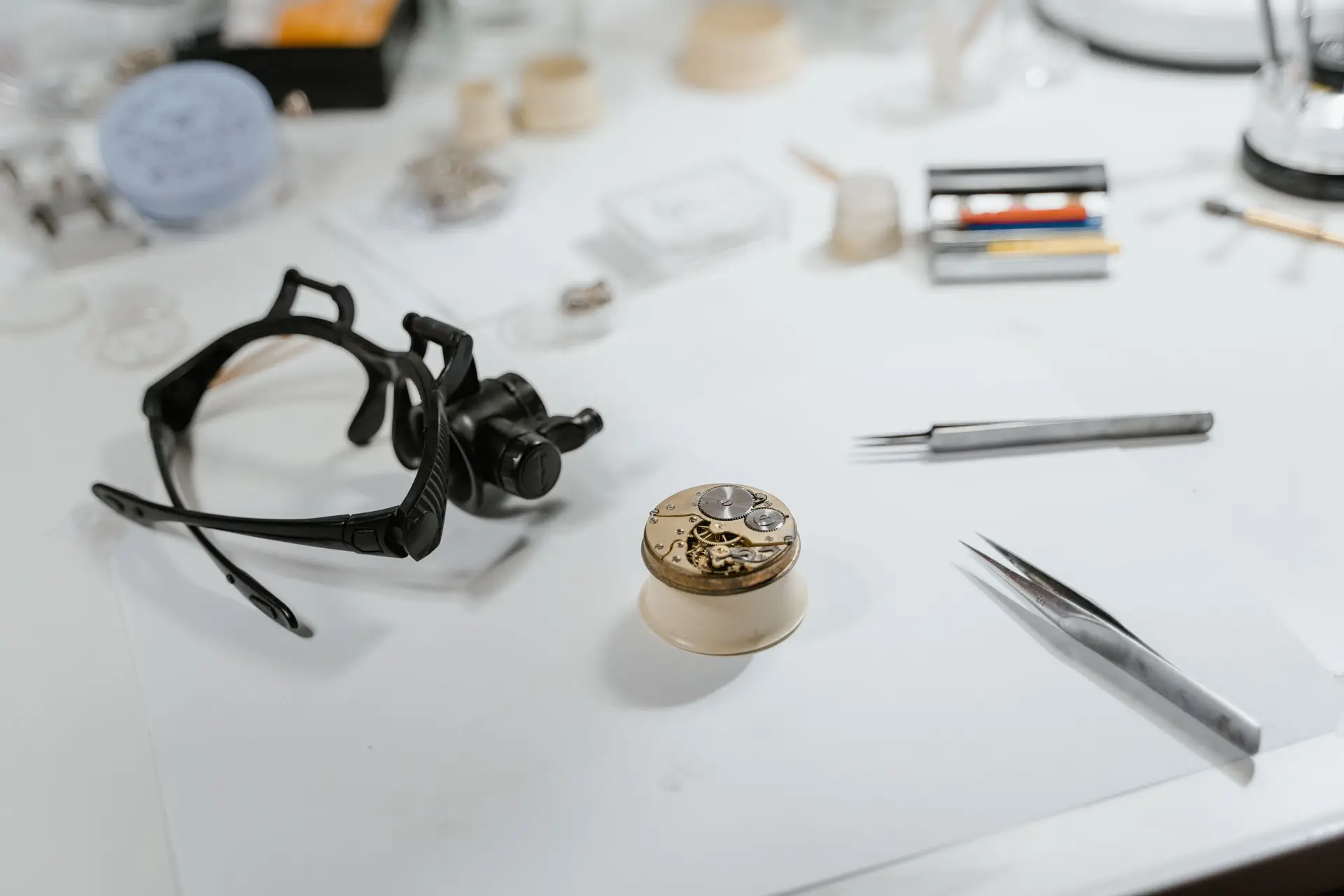
Many enquiries begin with an inherited object and very little technical information. Others come from owners who wear a watch regularly, or collectors trying to preserve an unusual mechanism. The starting point can be different; the workshop process remains evidence-led.
You do not need to know the calibre, escapement type or service history to contact us. Clear photographs and a description of what the timepiece is doing are enough to begin the conversation.
For larger clocks, fragile pieces or items with uncertain condition, contact us before transport so we can advise on safe handling and what information to bring.